

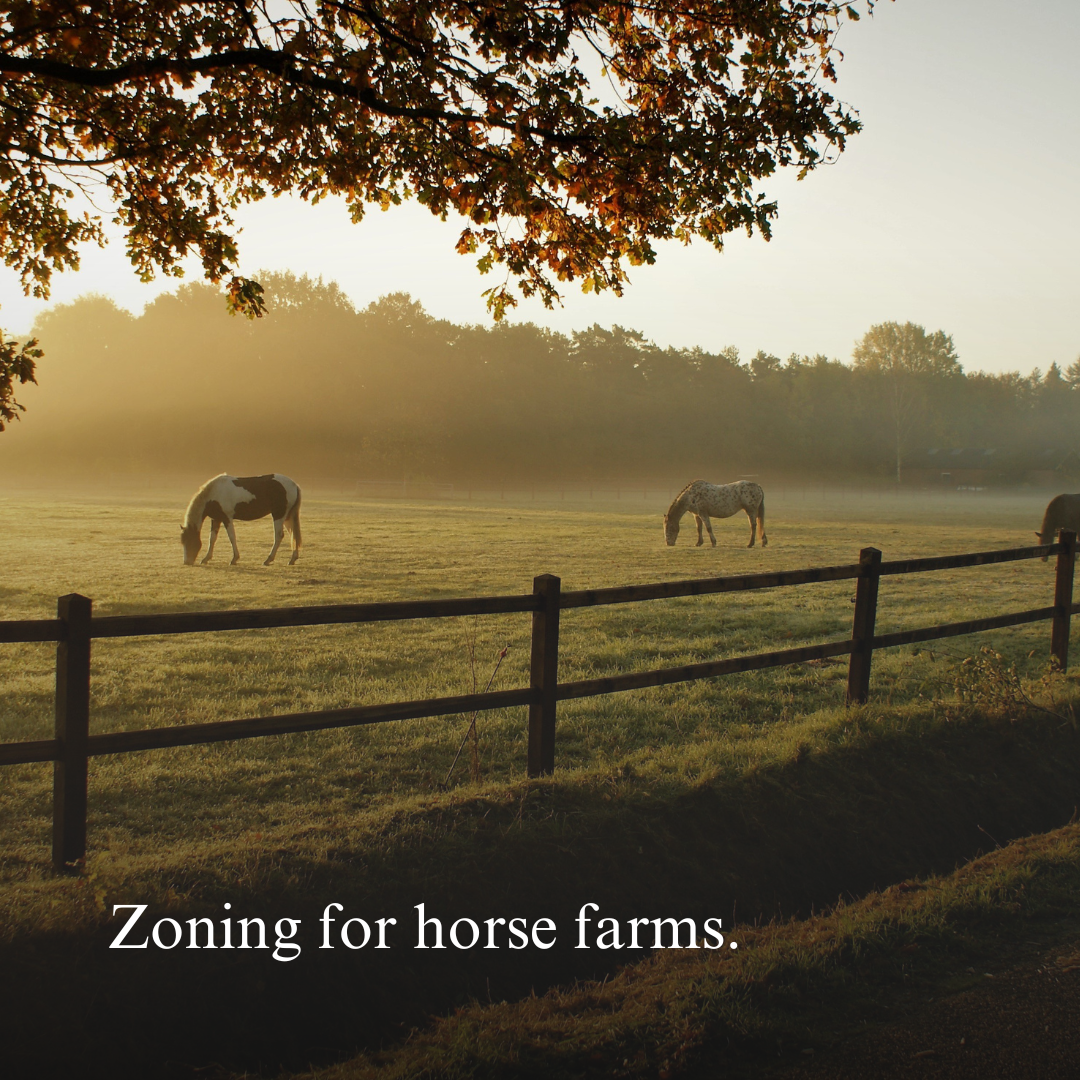
What are the zoning restrictions for horse farms in Maryland? This is one of the most frequently asked questions I get as a real estate agent specializing in farms. The answer really depends on where you are looking to buy. Zoning ordinances do change from time to time so I won’t be posting a breakdown of every zoning law regarding horses in each county, but never fear! There are some simple ways to figure out what is permitted in each county.
First & Foremost. Do not trust a property listing to give you the zoning. Always double check! I will often check zoning and easements before I go look at a property with a buyer so we are not spending time looking at a property that will not work. It is often a good idea to call the county to verify that what you plan to do is allowed on a property and then ask them to send their answer over in writing too. But what if you want to go look at a property and it is a weekend or a holiday and the zoning office is closed? Here’s how you can do a preliminary check yourself.
Zoning Maps. First and foremost, you will need to look up the zoning map for the county and find the property’s zoning. Most counties have interactive GIS maps which makes this pretty simple.
County Ordinances. Once you have the zoning, you need to reference the ordinance which is usually online as well. It will give you the definitions for each zone and outline the permitted uses. Many residentially zoned areas do list agriculture as a permitted use. In some cases, agriculture is a permitted use with conditions. For example, many counties will require that a property have at least 3-5 acres in order to accommodate horses and some have limitations on how many horses you can keep per acre. Make sure you look at the county’s definition of agriculture. Does it include the keeping, boarding, and/or breeding of horses? You may also need to see if they have definitions for private or commercial stables.
Special Exceptions. Variances and special exceptions already in place do not necessarily convey to buyers. Occasionally, I come across properties listed as farms complete with barns and “grandfathered into” an otherwise residential zone with a high population density where agriculture is not a permitted use. It is important to remember that just because a seller has horses due to a variance or special exception, doesn’t mean the buyer will be able to keep horses too. Typically, a buyer will have to apply for a new variance.
Sarah is a Maryland Realtor specializing in residential and equestrian properties.
Posted by Sarah Lipkowitz on
Leave A Comment